







The urban housing is now more determined by its ability to facilitate comfort in day-to-day living as well as long-term convenience. Contemporary people are no longer focused on the place and appearance; they desire environments that are practical, balanced, and flexible. This change is evident in the development of Tengah Garden Residences and Promenade Peak, where emphasis has been given towards careful design and human-focused designs. These residential settings are planned to meet real lifestyle requirements as opposed to abstract design fashions.
Comfort as a Foundation of Residential Design
Intelligent spatial organization is the starting point of comfort. Tengah Garden Residences puts emphasis on how well-balanced interiors can enable the residents to experience routines without any friction. The layout of rooms, flow of circulation, and visual openness of the homes promote a sense of tranquility and functionality in the homes. The aim, as opposed to increasing density, would be to develop spaces which promote rest, productivity and personal health in an organized urban environment.
Community Spaces That Encourage Natural Interaction
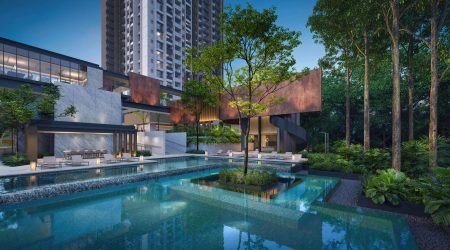
Homes have become significant in shaping social relationships. Instead of imposed interaction, design-led planning promotes natural interaction. In projects such as Promenade Peak, communal spaces are placed in such a way that they seem to be open but are not intrusive. The use of open communal areas, landscaped areas to give relief to the eye, and the transition of private and shared environments to be smooth will enable the community to interact naturally without interfering with individual comfort.
Convenience Integrated into Everyday Living
Close-to-home services are no longer the only ones that are convenient. It will be incorporated into the house plan. Tengah Garden Residences is no different with its focus on easy access, rational internal movement, and less traveling within the living premises. The residents enjoy the use of user-friendly circulation routes, effective planning of storage, and layouts that accommodate various activities in everyday life without clashing with space to provide a smooth living experience.
Design Supporting Sustainability and Efficiency
The contemporary living spaces are supposed to be sustainable, but at the same time comfortable. Promenade Peak is an example of how designing can be more efficient, instead of making it more complicated. The layouts are optimized to allow natural light penetration, and the orientation of units is well done to enhance ventilation. Effective use of space will also result in less reliance on energy, and thus it will aid in designing homes that will be comfortable and yet environmentally friendly.
Balancing Privacy Within Shared Environments
The issue of privacy is a major concern in residential high-density developments. The environments that are well planned acknowledge the necessity of separation as well as accessibility. Tengah Garden Residences represents the application of design methods that include buffer zones, spacing between units, and management of sight lines to allow residents to experience privacy without feeling isolated. This equilibrium enables people to withdraw in a comfortable situation, but in the process, still feel part of a bigger community set up.
Conclusion
Residential environments have to change as cities continue to grow and cannot just be used to provide shelter only. Promenade Peak and Tengah Garden Residences are part of a bigger trend of holistic planning in which comfort, community and convenience are in harmony. Through their smart design and person-centered approach, these residential spaces match the future of city living, providing space that will be useful, flexible, and accommodating to their needs in the long term.